
The office cleaning contract is more than just an agreement on price and number of visits. It is the document that defines the relationship between the company and the entity providing cleaning services, and it clearly outlines what will be cleaned, how it will be cleaned, the number of times services will be provided, who is responsible for providing labor, equipment, and materials, and how the quality of service will be measured.
For companies and offices that rely on a clean and organized work environment on a daily basis, having a clear and detailed contract helps ensure service continuity, reduce misunderstandings, and establish clear standards that can be referred to when evaluating performance.
Whether the office belongs to a commercial company, a non-governmental organization, a financial institution, a consulting firm, or an administrative office, choosing the right cleaning company does not depend solely on price, but on the company's ability to provide an organized and measurable service that fits the nature of the establishment and its needs.

ما هو عقد تنظيف المكاتب التجارية؟
The office cleaning contract is an official agreement between the client and the cleaning company that specifies in detail the services to be provided over an agreed-upon period.
The contract typically includes:
- The scope of required cleaning services.
- The areas and spaces covered by the service.
- The number of cleanings and the frequency of each task.
- Working hours and the times the cleaning team enters.
- The number of team members required.
- The responsibilities of the supervisor and the cleaning team.
- The equipment and materials provided by the cleaning company.
- Quality standards and performance monitoring mechanisms.
- The method of handling feedback and complaints.
- Prices and payment terms.
- The duration of the contract and renewal mechanisms.
- The mechanism for adjusting the scope of service when the client's needs change.
- Termination and replacement conditions.
- Safety, confidentiality, and protection of the client's property requirements.
Therefore, a good contract does not leave service details to expectations or verbal understandings, but rather turns them into clear requirements that both parties can refer to.
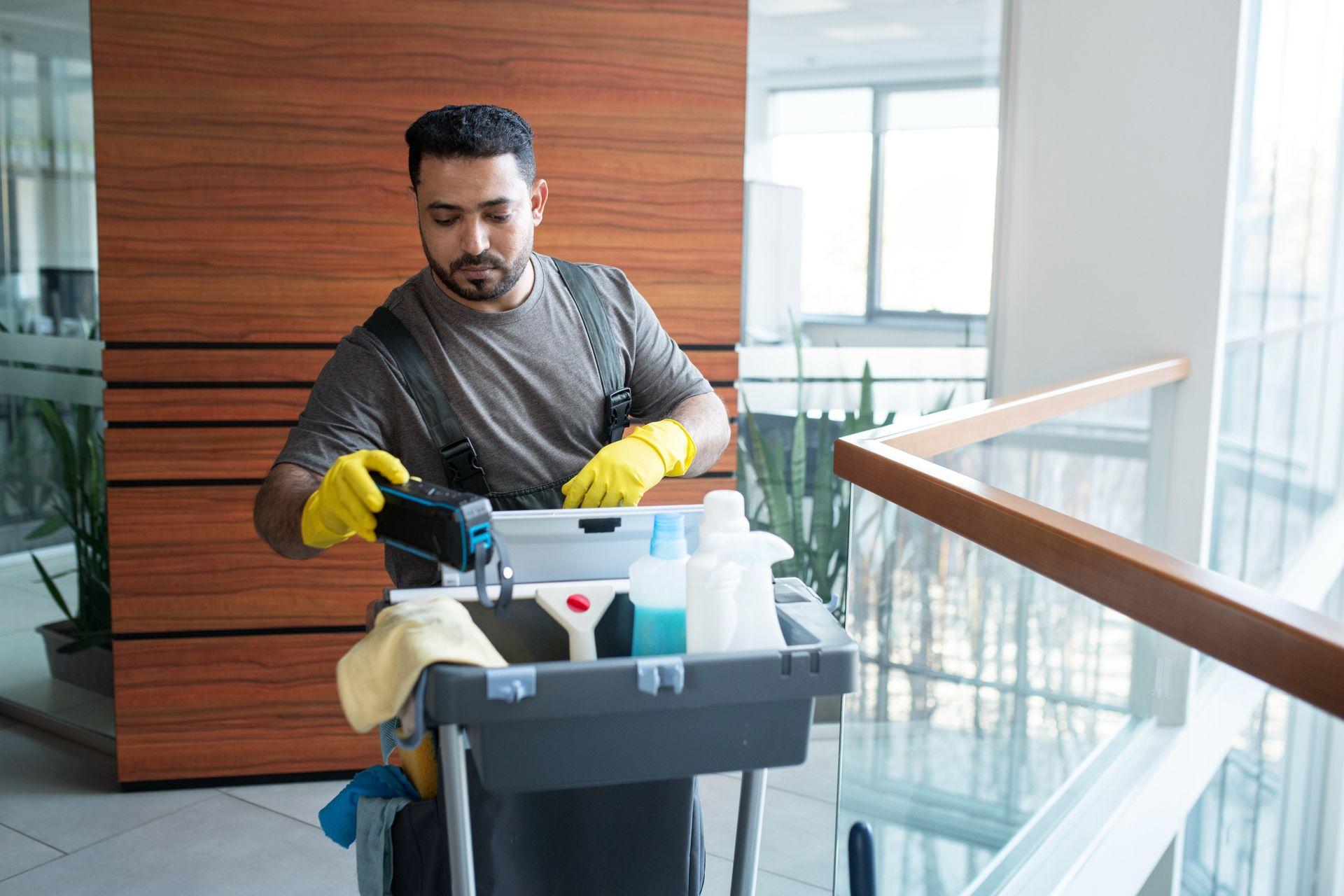
Why do companies need a clear cleaning contract?
Clearly define responsibilities
When the scope of work is written in detail, each party knows what is required of them.
For example, a phrase like "office cleaning" may be insufficient to define the service. Does it include cleaning offices and surfaces? Does it include kitchens? Does it include interior glass? Does it include disinfecting high-touch surfaces? Does it include refilling soap and tissues?
The detailed contract answers these questions before the service begins.
Ensure consistent service level
Commercial cleaning is not a one-time process, but an ongoing service. Therefore, there should be a clear standard that can be used to track performance levels from week to week and from month to month.
Daily, weekly, and monthly tasks can be defined, along with periodic tasks or additional services performed as needed.
Provide a clear mechanism for performance monitoring
A good contract not only specifies what will be cleaned, but also clarifies how it will be ensured that the service is performed at the required level.
Monitoring mechanisms may include:
- Supervisor site visits.
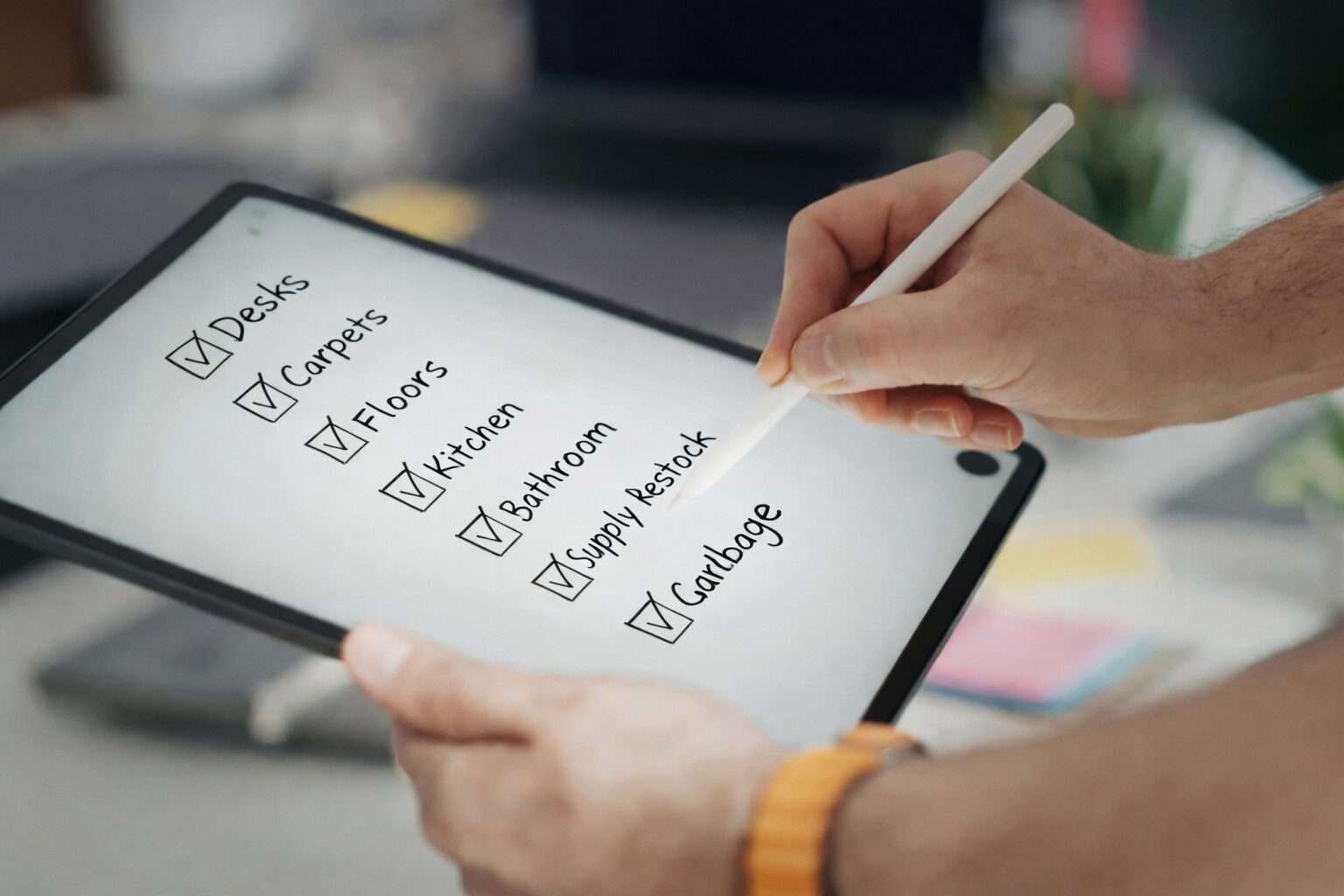
- Periodic checklists.
- Monitoring team attendance.
- Reviewing client feedback.
- Recording notes and corrective actions.
- Regular meetings to review service level.
- Periodic performance reports as needed.
Protecting both parties
The contract protects both the client and the cleaning company at the same time, as it clarifies the rights and obligations and the financial and operational responsibilities of each party.
It may also include clauses related to confidentiality, occupational safety, and protection of property, liability for damages, and access for the workforce to the facility.
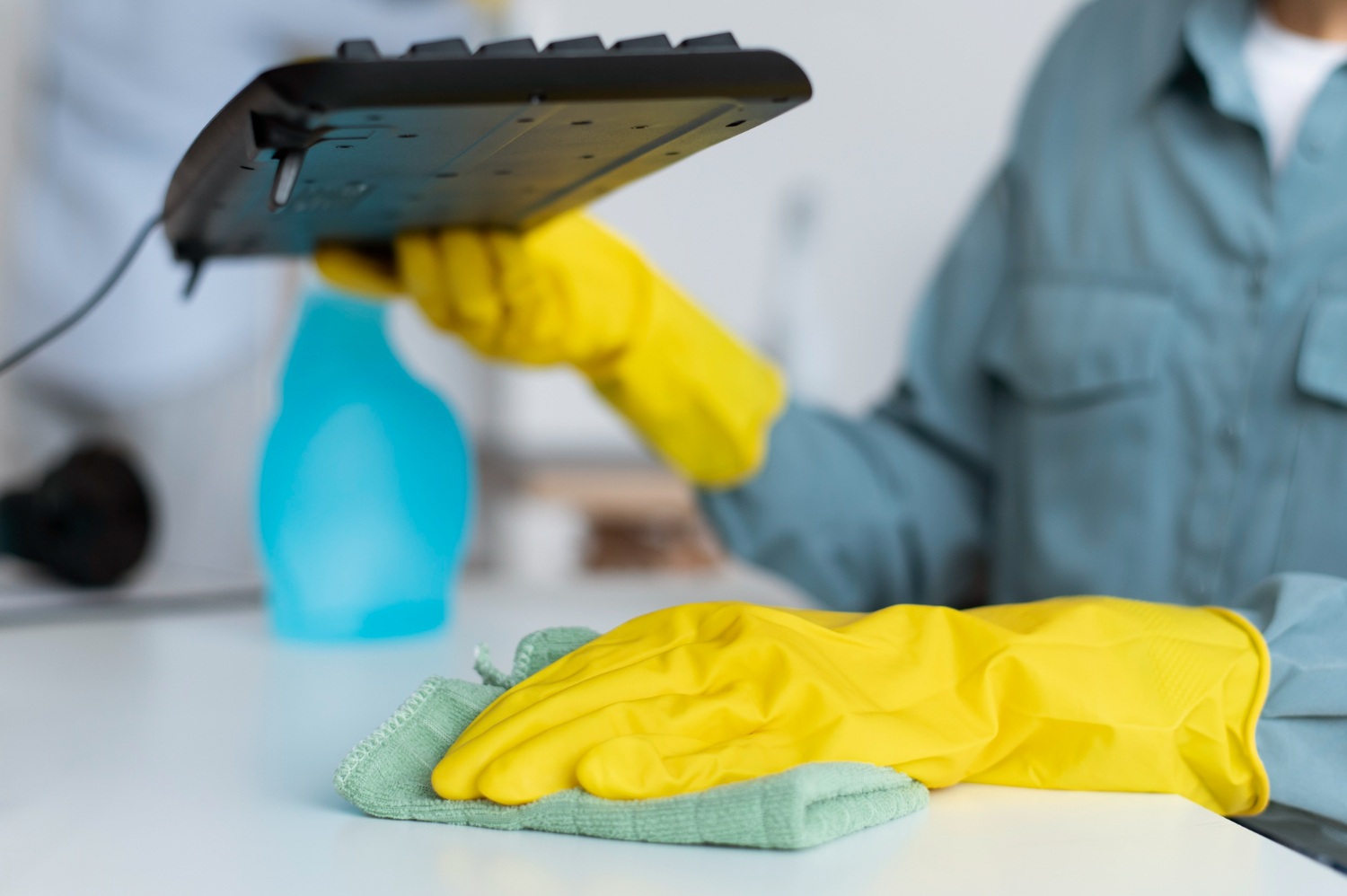
What should a office cleaning contract include?
First: Scope of Work
The scope of work (Scope of Work) is the most important part of the cleaning contract.
The contract should not be limited to general phrases like "providing comprehensive cleaning services," but should clearly specify the tasks, areas, and frequency of service.
For example, office cleaning may include:
- Dusting desks and surfaces.
- Cleaning floors and vacuuming carpets.
- Emptying waste baskets.
- Cleaning and disinfecting high-touch surfaces.
- Cleaning doors and handles.
- Cleaning meeting rooms.
- Cleaning kitchens and break areas.
- Cleaning and disinfecting restrooms.
- Cleaning mirrors and interior glass surfaces.
- Cleaning common areas.
- Rearranging some areas according to the nature of the agreed-upon service.
However, it is not necessary for all these tasks to be daily. This is where the importance of specifying the frequency of each task comes in.
Second: Cleaning Frequency Schedule
Tasks should be specified according to their frequency, such as:
Daily tasks
Include tasks that need to be performed regularly to maintain cleanliness, such as cleaning restrooms, emptying trash, cleaning reception areas, and cleaning floors and high-traffic areas.
Weekly tasks
May include detailed cleaning of certain areas, cleaning corners and less-used areas, and performing additional tasks that do not need to be done daily.
Monthly or periodic tasks
It may include detailed cleaning of specific areas, cleaning some high surfaces, or performing additional cleaning tasks depending on the nature of the facility.
Deep cleaning
It is better to specify deep cleaning services separately from daily cleaning, because their nature, duration, labor requirements, and equipment differ.
Depending on the location, it may include cleaning floors using specialized equipment, cleaning carpets and upholstery, cleaning glass, and cleaning hard-to-reach areas.
Third: Number of workers and supervision
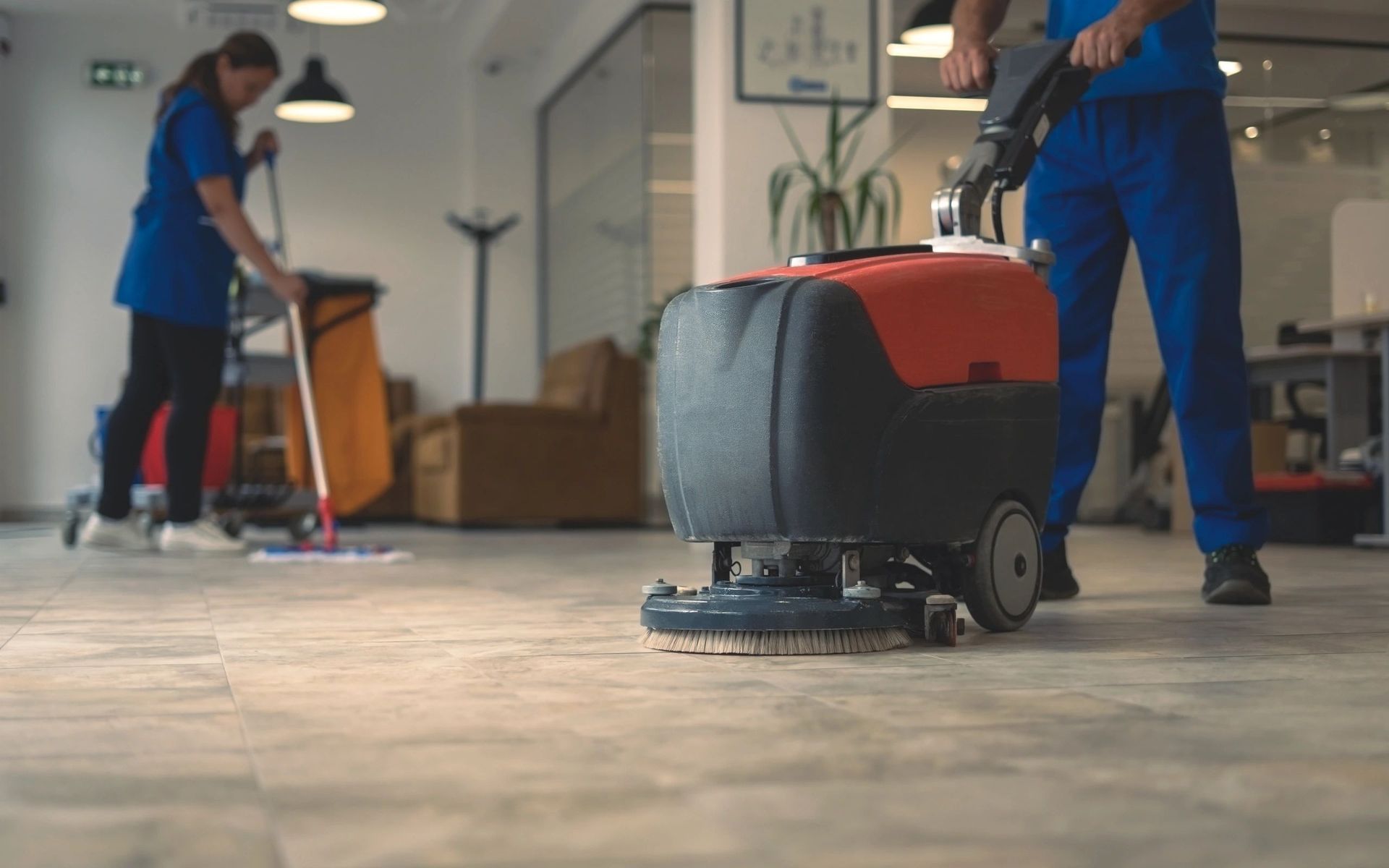
One of the important points that should be specified in commercial contracts is the number of cleaning team members required.
The need does not depend only on the office space, but also on:
- The number of employees.
- The number of restrooms.
- The number of floors.
- The number of kitchens and break areas.
- Visitor traffic.
- Working hours.
- The required level of cleanliness.
- The nature of the building.
- The number of areas that need frequent cleaning.
Supervisory responsibility should also be defined. Having a supervisor on the service helps in monitoring attendance, distributing tasks, ensuring the scope of work is executed, addressing feedback, and monitoring service quality on-site.
Fourth: Equipment and cleaning materials
One of the matters that should be clearly agreed upon: who is responsible for providing the equipment and materials?
In commercial cleaning contracts, it is important to specify this from the beginning to avoid unexpected additional costs.
The equipment and materials may include, depending on the nature of the service:
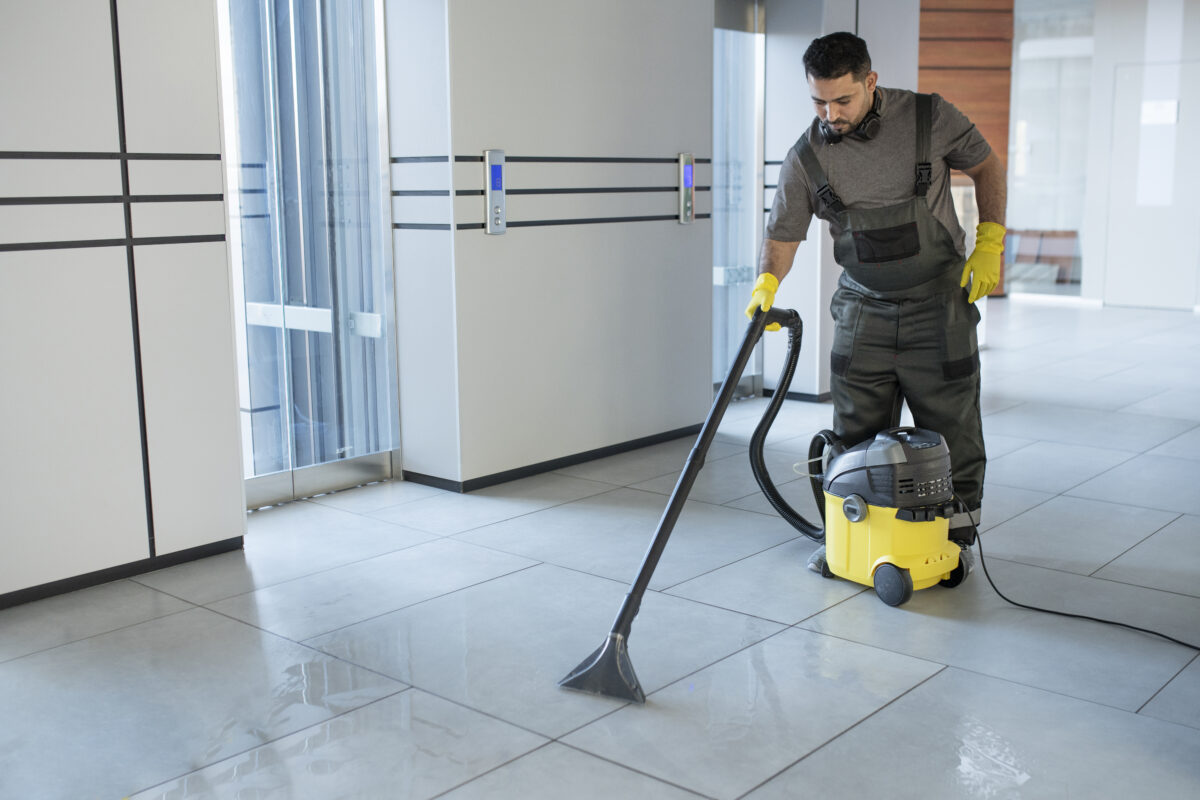
- Commercial vacuum cleaners.
- Floor cleaning equipment.
- Wet and dry cleaning equipment.
- Carpet and upholstery cleaning equipment.
- Glass cleaning tools.
- Cleaning carts.
- Cleaning and disinfecting materials.
- Trash bags.
- Personal protective equipment as needed.
It should also be clarified whether the consumables for restrooms, such as soap and paper towels, are included in the contract or charged separately.

Fifth: Quality and performance indicators
Having a cleaning team on site does not necessarily mean that the service is provided at the required level. Therefore, it is better for the contract to include a clear mechanism for quality monitoring.
An SLA – Service Level Agreement can be used to define the expected level of service, along with appropriate performance indicators for the nature of the site.
Performance indicators may include:
- Adherence to the work schedule.
- Completion of specified tasks.
- Level of cleanliness in key areas.
- Cleanliness of restrooms.
- Handling of feedback.
- Speed of implementing corrective actions.
- Regularity of supervision.
- Adherence to safety procedures.
Most importantly, these standards should be realistic and measurable, not just general statements like "providing high-quality service."
What happens when there is a comment or complaint?
Even with a good system, comments may arise during the contract period. Therefore, there should be a clear mechanism to address them.
For example:
- The client registers the comment.
- It is directed to the supervisor or contract manager.
- The issue is assessed and the required action is determined.
- The corrective action is implemented within the agreed timeframe.
- It is ensured that the comment is closed.
- Additional measures are taken if the problem is recurring.
Having this mechanism is much better than relying on random communications or unverified complaints.
Sixth: Confidentiality and Protection of Client Information
The cleaning team may enter offices that contain sensitive documents and information, especially in financial companies, law offices, international organizations, and consulting firms. Therefore, the contract should include, when necessary, clear requirements related to confidentiality and information protection, and employees should be made aware not to access documents or files or data located in the offices, and not to photograph or share any information pertaining to the client. Contracts may also include special procedures for employees entering sensitive or restricted areas.
Seventh: Safety and Responsibility
The contract should clarify the responsibilities of each party regarding occupational health and safety.
This includes:
- Training cleaning staff.
- Using personal protective equipment when necessary.
- Safe handling of cleaning materials.
- Storing chemicals properly.
- Using equipment according to operating instructions.
- Reporting hazards or incidents.
- Complying with entry and work procedures within the client's facility.
Responsibilities related to insurance, damages, and incidents should also be defined according to applicable laws and contract terms.
How are office cleaning contracts priced?
There is no standard price for all offices. The price is determined based on a set of operational factors.
Among the most important are:
Facility size
The size affects the size of the workforce, time, and equipment required, but the size alone is not enough to determine the price.
Number of service occurrences
Daily cleaning differs from service three times a week or once a week.
Number of workers
As the service requirements increase in terms of team size and working hours, it reflects on the contract cost.
Nature of the facility
The needs of a regular administrative office differ from those of a clinic, an industrial facility, a customer reception center, or the headquarters of an international organization.
Scope of work
As the number of required tasks increases, the resources needed to execute them also rise.
Working hours
Cleaning during working hours may require different organization than cleaning after hours or during the night.
Equipment and additional services
Some locations require specialized equipment or additional periodic services, such as carpet and upholstery cleaning, facade and glass cleaning, or floor cleaning using specialized equipment.
Common Pricing Models
Commercial cleaning services can be priced in several ways, including:
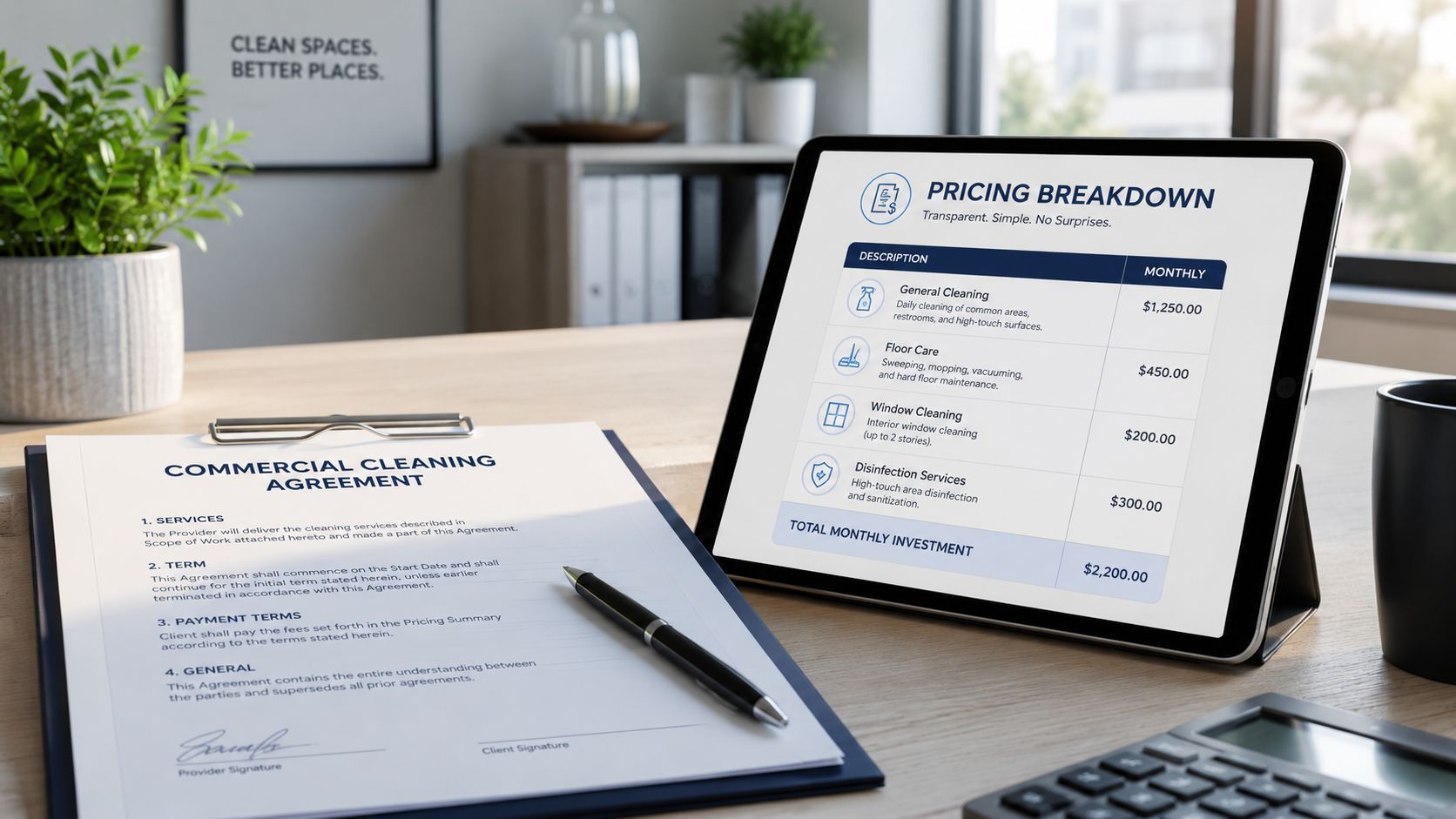
Fixed monthly price
This is suitable for contracts that include a clear service schedule and a fixed number of workers or visits and tasks.
Price per area
This can be used for some services that directly depend on the area, especially specific cleaning services or deep cleaning.
Price per hour
This is usually used for some temporary services or tasks that are difficult to specify in advance in terms of time.
In long-term contracts, the client should not look at the price alone, but at what is actually included in the price.
The lower price is not necessarily the lower cost if it does not include equipment, or supervision, or materials, or the number of workers required to execute the scope of work.
How to choose a suitable cleaning company?
Choosing a cleaning company should start before signing the contract.
Check the experience
Ask about the company's experience in cleaning facilities similar to yours.
A company with experience in cleaning large commercial offices may be more capable of handling corporate contract requirements than a company that primarily works in residential cleaning.
Request references from previous clients
References help you understand the actual performance of the company.
Ask about:
- Punctuality.
- Stability of the workforce.
- Response speed.
- Quality of cleaning.
- Level of supervision.
- How problems are handled.
- Check employee training
Cleaning staff are the key element of the service.
Therefore, it is important to know if the company provides appropriate training on:
- Cleaning methods.
- Use of equipment.
- Handling chemicals.
- Occupational safety.
- Use of personal protective equipment.
- Client-specific site procedures.
- Ask about the quality control system: it is not enough for the company to say it "monitors quality". Ask how this is actually done. Is there a supervisor? Are there checklists? Are there inspection visits? How are observations documented? Who is responsible for following up on corrective actions? The clearer the answers, the better the indication of an actual operational system.
- Do not compare prices before comparing the scope of service: one of the most common mistakes is to choose the cheapest offer directly. If three companies provide different prices, it does not mean that the company with the lower price is offering the same service at a lower cost.
You should first compare:
- Number of workers.
- Working hours.
- Number of service days.
- Daily tasks.
- Weekly and monthly tasks.
- Equipment.
- Cleaning materials.
- Supervision.
- Deep cleaning services.
- Additional services.
- Quality control mechanism.
- Contract terms.
Only then does price comparison become fairer.
What should be discussed before signing the contract?
Before signing any commercial cleaning contract, it is best to review a set of key points with the service provider:
- What areas are covered by the contract?
- What are the daily, weekly, and monthly tasks?
- How many cleaning team members are there?
- What are the working hours?
- Is there a supervisor?
- Who provides the equipment?
- Who provides the cleaning materials?
- Are consumables included?
- How is quality monitored?
- How are complaints and feedback recorded?
- What is the response time for feedback?
- Are there additional services that can be requested?
- How are additional services priced?
- What is the duration of the contract?
- What are the renewal terms?
- What are the terms for modifying the scope of service?
- What are the terms for terminating the contract?
- What are the insurance and safety requirements?
- How is client information protected?
The clearer these points are before starting the service, the less likely disputes will arise later.
Can the cleaning contract be modified according to the company's needs?
Yes, in fact, service customization is considered one of the most important elements of successful commercial cleaning contracts. No two facilities are exactly alike.
One company may need full daily cleaning, while another company may need cleaning five days a week with monthly deep cleaning services. A facility with a large number of employees may require more attention to kitchens, restrooms, and common areas, while another company may need greater focus on meeting rooms and client reception areas.
Therefore, preparing a good proposal should start with a site inspection and understanding its needs, not just knowing the area.

Summary
A successful commercial office cleaning contract does not rely on price alone. It is a clear operational agreement that defines the scope of work, number of team members, cleaning schedule, equipment and materials, supervision, quality standards, feedback handling mechanisms, and the responsibilities of each party.
When choosing a cleaning company, do not just look for a company that offers the lowest price, but for a partner capable of managing the service continuously and systematically, with a trained team, effective supervision, a quality control system, and a clear response to client needs.
Ultimately, the goal of a commercial cleaning contract is not just to maintain the appearance of the office, but to provide a clean, safe, and organized work environment continuously, with a service that can be relied upon and its performance measured clearly.
If you are looking for office and company cleaning services tailored to the nature of your facility, then the first step is to conduct a site assessment and determine the scope of work and required resources before preparing the commercial proposal.